As the flagship annual research publication from Check Point Software Technologies, this report serves as a strategic reference for security teams, researchers, CISOs, and industry leaders. Rather than focusing on theoretical risks, it documents how adversaries are adapting in practice—across enterprise, cloud, edge, and hybrid environments.
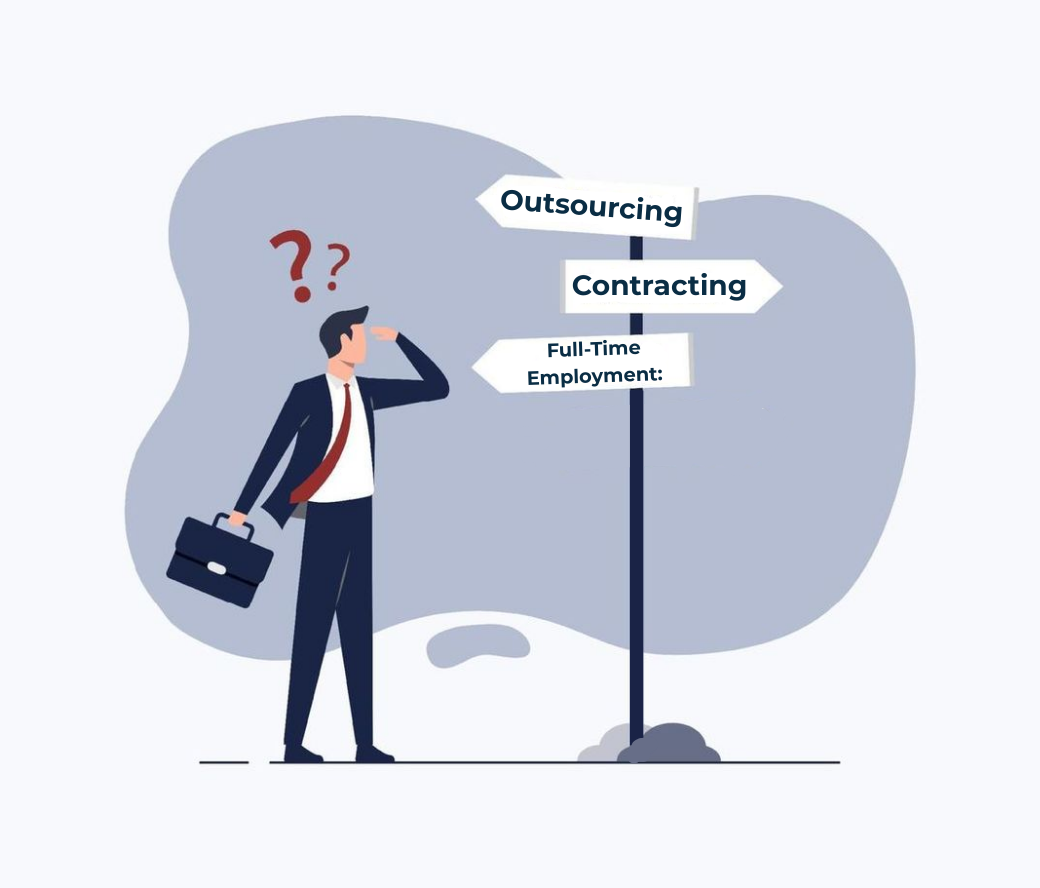
Outsourcing, contracting, and full-time hiring each have distinct advantages and limitations. Understanding the differences is essential for leaders who want to control costs, manage risk, and scale effectively.
Full-time hiring is the conventional model: recruiting employees who work directly for your company on a permanent basis.
Full-time hiring makes the most sense for core roles—positions tied directly to strategy, leadership, intellectual property, or long-term growth.
Contracting involves engaging an independent professional or freelancer to perform specific tasks or projects.
Contractors are ideal when you need expertise for a defined initiative such as website development, accounting cleanup, or marketing campaigns.
However, contractors typically function as individuals—not as systems. You still need to manage them.
Outsourcing is fundamentally different. Instead of hiring a person, you engage a company to take responsibility for a business function.
This may include customer support, IT services, bookkeeping, property management operations, or recruitment processing.
Outsourcing works best for non-core but essential activities. It allows internal teams to focus on high-value priorities while a partner handles execution.
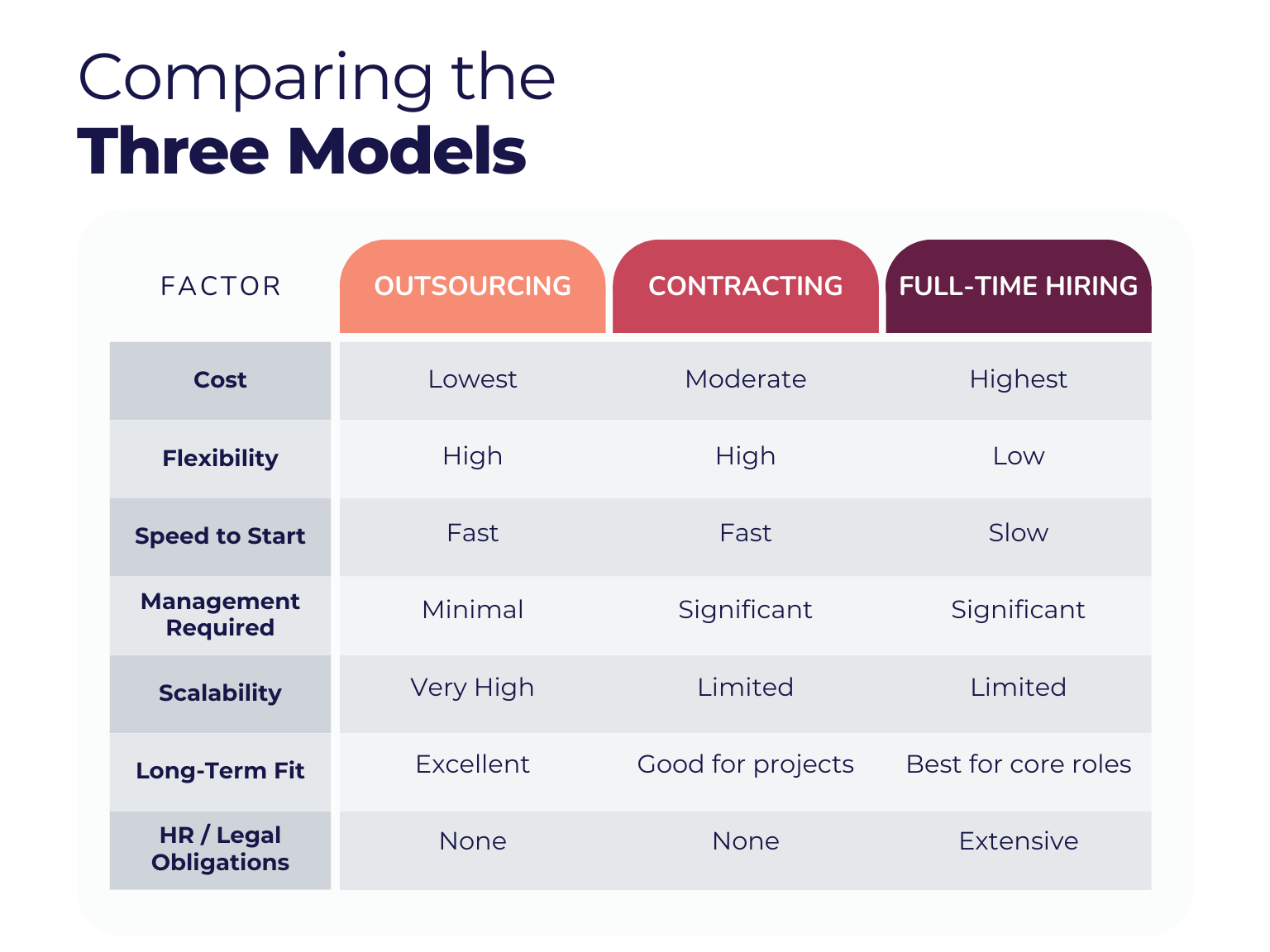
Modern companies rarely rely on just one model.
This blended workforce approach delivers the best balance of agility, efficiency, and control.
There is no universal “best” hiring model—only the best model for a particular need.
The key question for decision-makers is not:
“Should we outsource or hire?”
But rather:
“What is the smartest way to get this specific work done?”
By aligning the right workforce strategy to the right function, businesses can grow faster, operate leaner, and compete stronger in the years ahead.
Workforce strategy is easier when you have the right partner guiding you.

NGOs: unified communication, storytelling, scalable trust systems.
Read Full →

.png)